Each of us produces waste every day, even if we don’t think about it. A regular day is enough: a water bottle or juice box in the morning, then a food wrapper, maybe a pizza carton in the evening. All of this ends up in the trash, and for most people, that’s the end of the story. We throw the trash away and forget about it, as if it simply vanished. But the truth is, trash doesn’t disappear. It’s just beginning its journey. What happens to it depends largely on us, on whether and how we separate it. In this article, I’ll try to explain in simple terms what really happens to waste after it’s thrown away, whether sorting makes sense, which materials can be recycled, and the most common mistakes people make.

When you throw your trash in the bin, that’s the first step in the process. Then the garbage truck arrives and collects it. It seems ordinary, and most people only see that moment. However, what happens next is less obvious. If waste isn’t sorted and ends up in a single container, it usually goes straight to a landfill or incinerator. Landfills are huge places where waste is stored for years. The problem is that some materials take a very long time to decompose. Plastic can take hundreds of years to decompose, polluting the environment during that time. Furthermore, various substances can leach into the soil and water. The second option is an incinerator. Waste is burned at high temperatures. This provides energy, but it also produces exhaust fumes and other waste that also needs to be stored somewhere. This solution is slightly better than a landfill, but still not ideal.

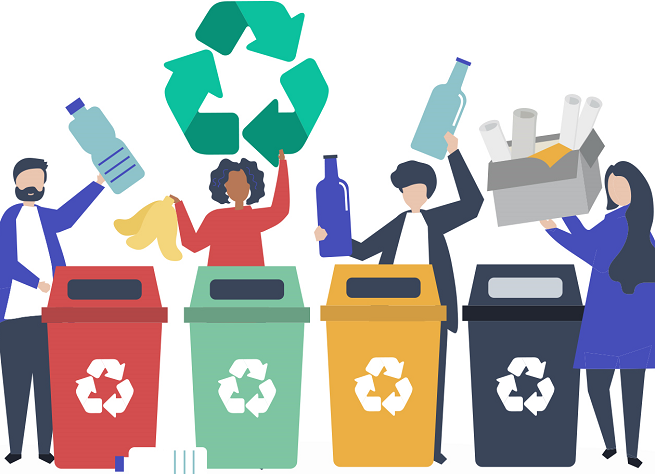
Waste separation makes sense, although many people doubt it or believe it doesn’t make a difference. You often hear that “they just mix it all up anyway,” so it’s not worth the effort. In reality, however, separation is very important and has a real impact on the environment and what happens to waste after it’s thrown away. First and foremost, separation allows for the recovery of raw materials that can be reused. If waste is properly separated from the start, it’s easier to process in sorting plants. For example, plastic bottles can be used to make new packaging or clothes, while paper can be returned as notebooks or cardboard. This means that everything doesn’t have to be produced from scratch each time, which means less use of natural resources like trees and oil. Segregation also reduces the amount of waste going to landfills. This is important because landfills take up a lot of space and can pollute the environment. The more waste that can be recycled, the less it ends up in landfills. This, in turn, reduces the problem of soil, water, and air pollution. Another important aspect is energy savings. Producing new materials from scratch often requires significantly more energy than processing existing ones. For example, recycling metal or glass uses significantly less energy than producing them from scratch. This means lower fuel consumption and fewer harmful emissions into the atmosphere. Waste sorting also has economic benefits. Recyclable materials, meaning those recovered from waste, have value. They can be sold and used in production, making the entire waste management system more profitable. When waste is poorly sorted, it becomes more difficult to reuse, and more of it ends up in incinerators or landfills, generating additional costs. It’s also worth noting that waste sorting teaches responsibility. When people start paying attention to what and where they throw away, they also become more conscious about their purchases and daily choices. This can lead to a reduction in the amount of waste produced. In summary, waste sorting truly makes sense. It helps protect the environment, saves raw materials and energy, and reduces the amount of waste going to landfills. Even if the system doesn’t work perfectly, it’s still worth sorting because it’s one of the easiest ways to do something good for the world.

The situation is different when waste is sorted. Waste is then placed in different containers, for example, for plastic and metal, paper, glass, bio-waste, and mixed waste. After being collected by a garbage truck, it is sent to a sorting facility. At the sorting facility, waste is separated even more thoroughly. This is often done by machines that recognize materials, but in many places, people also work to separate various items manually. This is an important step, because if something falls into the wrong category, it can hinder recycling. After sorting, some materials are sent to recycling plants. There, they are processed and turned into new products. For example, plastic bottles can be recycled into new packaging or clothing. Paper is shredded and processed into new paper. Glass is melted down and reused.
Materials suitable for recycling pollute the entire batch of raw material. When it comes to recycling, not every material can be recycled, but there are many that can be reused. The problem is that even if something is theoretically recyclable, in practice it can be rejected due to one simple mistake – contamination. And this is something that many people don’t think about. The most well-known recyclable material is plastic. We encounter it everywhere in our everyday life, mainly in the form of water bottles, drink bottles and food packaging. Things like PET bottles, shampoo packaging and some foils can be recycled and reused. For example, plastic bottles are used to make new packaging or even clothes, such as sweatshirts or T-shirts. However, it is important that the plastic is relatively clean. If the bottle is full of drink remains or the packaging is full of food, the recycling process becomes more difficult or even impossible. The next material is paper. Paper seems very easy to recycle, and it is, but only under certain conditions. Cardboard, notebooks, newspapers and boxes are suitable for recycling. The paper can be recycled into new paper several times, although each time its quality decreases a little. The problem begins when the paper is wet or greasy. For example, a pizza box often looks like paper, but is no longer recyclable due to the fat. In such a situation, it should go to mixed or bio-waste, if possible. Glass is one of the best materials for recycling. Bottles and jars can be recycled almost endlessly without losing quality. This means that one bottle can be used many times in different forms. But even here there are rules. Ceramics, mirrors or heat-resistant glass should not be thrown into the glass container, because they have a different composition and may interfere with the processing process. Metal is also very suitable for recycling. Aluminum cans, caps and various metal packaging can be recycled and reused. Interestingly, metal recycling is very profitable because it saves a lot of energy compared to producing new metal from scratch. There is also bio-waste, i.e. food leftovers, peelings and coffee grounds. They do not go into traditional recycling, but can be composted. This produces fertilizer that can be used in agriculture or horticulture. This is a more natural way of processing waste. And now the most important thing, i.e. contamination of the entire batch of raw material. This sounds a bit complicated, but it’s something simple. Imagine that a large amount of one material, for example plastic, is collected in a sorting facility. If most of this waste is well sorted and clean, it can be sent for recycling. But all it takes is for some of them to be heavily dirty or mixed with other materials to cause a problem. Contamination can take many forms. Most often, these are food leftovers, liquids or inappropriate materials thrown into the wrong container. For example, if glass or paper gets mixed into the plastic, machines may have trouble separating them. It’s even worse when the waste is very dirty. Then they may contaminate others that were previously suitable for recycling. In practice, this means that the entire batch of raw material may be considered unusable. Instead of being recycled, it goes to an incinerator or landfill. So, because of a few mistakes, a lot of material that could be reused is wasted. It’s a bit like food. If you have a whole pot of good soup and someone puts something rotten in it, you probably won’t eat it. It works the same way in recycling. One problem can ruin everything. That’s why it’s so important that the waste is relatively clean and well sorted. It’s not about washing everything perfectly sterile, but about not leaving large remnants of food or liquids. Just empty the packaging or rinse it quickly with water. In summary, many materials are recyclable, such as plastic, paper, glass and metal. However, whether they actually get processed depends on how we throw them away. Contamination of an entire batch of raw material is a big problem, which means that even good waste can be wasted. That’s why it’s worth paying attention to the basic rules, because even small things matter.
People often make mistakes when sorting, even with good intentions. One of the most common problems is dirty packaging. If a lot of food remains in the packaging, it can hinder recycling. Another mistake is throwing waste into the wrong bin. Sometimes people don’t know where to put something, and sometimes they simply don’t bother checking. This, however, causes problems at the sorting facility. It also often happens that greasy paper ends up in the paper bin when it shouldn’t. Pizza cartons are a classic example. If they are soiled with grease, they are not recyclable. Some people put all their waste in one bag, even though it’s sorted. This makes the whole sorting process pointless.
To better understand this, here’s a simple way to illustrate the waste journey:
First, you throw your trash into the trash can at home. Then, a garbage truck collects the waste and transports it onward. The next step is the sorting plant, where the waste is separated into various materials. Some of it then goes to the recycling plant, and the rest goes to the incinerator or landfill.
This can be written like this:
Home → Trash → Garbage Truck → Sorting Plant → Recycling / Incinerator / Landfill
This is, of course, a simplification, but it illustrates the general process well.
What materials are recyclable?
Not all waste can be recycled, but many can. It’s important to know what can be disposed of in the appropriate containers.
Plastic is one of the most common materials. For example, water bottles, cosmetic packaging, and some plastic films are recyclable. However, it’s important that they aren’t too dirty.
Paper can also be recycled. This category includes cardboard, newspapers, notebooks, and various paper packaging. The problem arises when paper is greasy or wet, as it is then unsuitable for recycling.
Glass is an excellent material for recycling. Bottles and jars can be reused many times. However, it’s important to remember that not everything that looks like glass is suitable for the same container. Ceramics or mirrors, for example, are different materials.
Metal, such as cans and bottle caps, can also be recycled. This is very cost-effective because the metal can be recovered and reused without significant loss of quality.
Bio-waste, i.e., food scraps, can be composted. This is a natural fertilizer that can be used in agriculture.


People often make mistakes when sorting, even with good intentions. One of the most common problems is dirty packaging. If a lot of food remains in the packaging, it can make recycling difficult.
Another mistake is throwing waste into the wrong bin. Sometimes people don’t know where to put something, and sometimes they simply don’t bother checking. This, however, causes problems at the sorting facility.
It also often happens that greasy paper ends up in the paper bin when it shouldn’t. Pizza cartons are a classic example. If they are dirty with grease, they are not recyclable.
Some people put all their waste in one bag, even though it’s sorted. This makes the whole sorting process pointless.

Recycling is a good solution, but it’s not perfect. Not all materials can be recycled, and sometimes the process is prohibitively expensive. Furthermore, if waste is poorly sorted or contaminated, it may not be recyclable.
Plastic is a good example. Theoretically, it can be recycled, but in practice, only a fraction of plastics is actually recycled. The rest ends up in landfills or incinerators.
Unfortunately, not all waste can be recycled. What’s unsuitable ends up in landfills or incinerators. This is a significant problem, as waste volumes continue to grow.
Landfills take up a lot of space and can pollute the environment. Incinerators reduce the volume of waste, but they also have their drawbacks.
Everyone can do something to make things a little better. You don’t have to be perfect. A few simple things are enough.
You can separate your waste, be mindful of what you buy, avoid excess plastic, and stop wasting food. These are small steps, but when many people take them, they make a big difference.
Garbage doesn’t disappear once it’s thrown away. It ends up in various places and can remain there for a very long time. What happens to it depends on how we initially treat it. Segregating makes sense because it allows us to recover some materials and reduce the amount of waste going to landfills. However, it’s important to do it correctly. The most important thing is to be aware. Even small changes in your daily life can have an impact on the environment. And while this won’t solve all problems, it’s a step in the right direction. Let’s be mindful of what we throw away – because every piece of waste has a story and can have a future.