Water. Every day we drink it, wash our hands with it, cook with it, water our flowers, and we don’t think twice about it. We turn on the tap, take a shower, and assume there will always be plenty. Yet we live in a time when this seemingly infinite resource is becoming one of the planet’s most precious and endangered treasures. The title of this blog – “Water – The resource we forget about” – is not accidental. In the era of smartphones, electric cars, and artificial intelligence, water remains in the shadows. We forget that without it, there is no life, no agriculture, no industry, no us. According to the latest UN report from January 2026, the world has entered an era of “global water bankruptcy.” The damage to water systems is already irreversible in many regions. Three-quarters of humanity lives in countries deemed water-unsafe or critically water-unsafe. Four billion people – almost two-thirds of the Earth’s population – experience severe water scarcity for at least one month of the year. Over 2.2 billion lack access to safe drinking water, and 3.5 billion lack basic sanitation. This isn’t the future. It’s the present. And it applies to us, too, in Poland. In this post, we’ll explore three key questions: why water is a limited resource, how much water the average person actually uses (not just directly from the tap, but also “virtually”), and – most importantly – how each of us can conserve it. While the problem is global, solutions start with small, everyday habits. This article is approximately 2,000 words long – because the topic deserves a deeper look than a short Instagram post. Buckle up. It’s time to talk about water honestly and without beating around the bush.


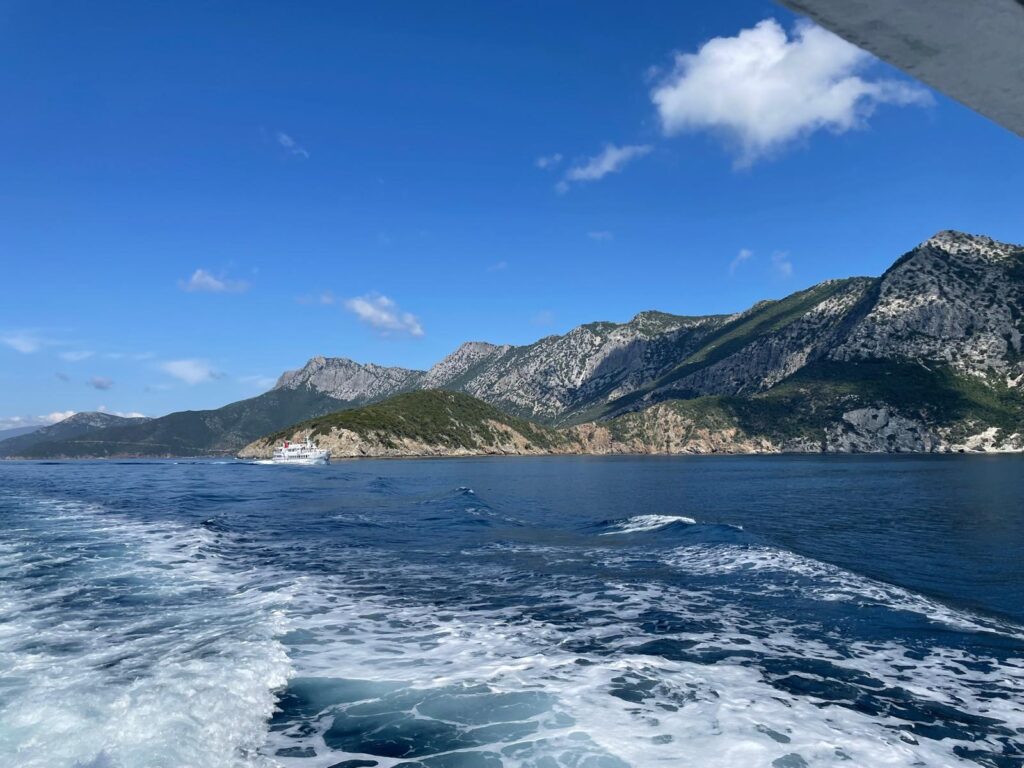
The largest sewage treatment plant in Poland:
Why is water a limited resource? Geography, humans, and climate Let’s start with the basics. There’s a huge amount of water on Earth—about 1.4 billion cubic kilometers. Sounds impressive, right? The problem is that a staggering 97% of it is saltwater in the oceans. Of the remaining 3% of freshwater, most (almost 70%) is trapped in glaciers, polar caps, and snow. Freshwater accessible to humans—the kind in rivers, lakes, and shallow aquifers—represents less than 1% of all the planet’s water. It’s a drop in the ocean. Literally. But even this drop is under enormous pressure. Firstly, its uneven distribution. The greatest amount of freshwater falls in humid regions: the Amazon, Siberia, and the Congo. The least—in the Middle East, North Africa, and parts of South Asia. According to the World Resources Institute, 25 countries experience extremely high water stress, using over 80% of renewable water resources annually. Bahrain, Kuwait, Qatar, Lebanon, and Oman top this blacklist. By 2040, the number of such countries could increase. In Poland, the situation isn’t as dire as in Qatar, but it’s far from comfortable. Our country has some of the lowest freshwater resources in Europe – approximately 1,600 m³ per capita per year (data from NIK and Eurostat reports). For comparison, the European average is over 4,000 m³, and in Scandinavian countries, even 20,000 m³. We’re on par with Egypt and Libya. In dry years, such as 2018 and 2022, the indicator dropped below 1,100 m³. This is the threshold at which “water stress” begins. Polish rivers – the Vistula, Oder, and Warta – shrink dramatically during periods of drought. Water retention is dire: we retain only 6.5% of rainfall, while Spain retains almost 50%. The result? Agricultural droughts and local crises in cities are becoming increasingly frequent. Why is this happening? Three main culprits: overexploitation, pollution, and climate change.
Overexploitation. Agriculture consumes 70% of global freshwater. Industry accounts for approximately 20%, and households for only 10–12%. In Poland, industry (primarily energy and mining) consumes as much as 79% of water withdrawals, agriculture for only 8%, and households for 13%. But the real problem is “virtual water”—the water hidden in products. One kilogram of beef requires 15,000 liters of water (for growing feed, drinking water for cattle, and processing). One pair of jeans requires 8,000–10,000 liters. A cup of coffee—130 liters. A glass of milk—250 liters. Globally, water consumption has increased by 25% since 2000, and even faster in already arid regions. Pollution. 80% of the world’s wastewater is returned to the environment untreated. Historically, the problem in Poland was enormous – in the 1990s, 95% of river waters were considered undrinkable. Today, thanks to EU investments, the situation is better, but nitrates from fertilizers, pesticides, and microplastics still pollute rivers and lakes. Contaminated water is “lost” water – unsuitable for use without costly treatment. Climate change. NASA’s 2024-2025 report shows that since 2015, global freshwater resources on land have decreased by 1,200 km³ – the equivalent of 2.5 times the volume of Lake Erie. Droughts are longer and more intense. Glaciers have melted by 30% since 1970. In Poland, the phenomenon of “hydrological droughts” is intensifying: less snow in winter, heavy rains in summer, which flow into the Baltic Sea instead of replenishing the soil. A 2026 UN report puts it bluntly: hydroclimatic changes are the cause of 49% of water shortages, but combined with excessive abstraction and population growth, they create a perfect storm. The effects? Cities like Mexico City (which is sinking by 20–50 cm per year due to excessive groundwater pumping), Cairo, Cape Town, and even parts of California and Australia. In Poland, Greater Poland, Łódź, and Lower Silesia are the regions with the greatest deficit. Farmers are losing crops, food prices are rising, and in extreme cases, water supply restrictions are emerging. By 2050, three-quarters of humanity could be affected by drought. It’s time for a change of mindset: water is not infinitely renewable.